Horror

Horror

Tuesday, 25 August 2015

Summer job + Future of cinema

     Sensory technician, summer job and the future of cinema


Over the summer I worked as a sensory technician for a local community festival called the Shuffle Festival who hosted a programme called ’The Feelies’ where guests would enter a virtual reality through a multi-sensory screening. 

The initial idea was to experiment on how all the senses- touch/smell/see and sound (excluding taste for obvious reasons) combined, effects how amerced an audience can be. There were 2 short 6/8 min screening, both documentaries produced by Chris Milk: 1. Walking New York and 2. Clouds over Sidra, shot on a 360 degree camera for the Samsung Oculus rift head sets.

As a sensory technician, the most important thing was making sure that what the guests were watching was in sync to what we can see (on an iPad) this is so that the guests are fully amerced into what they are watching. So for example, in screening room 1 (Walking New York) after the headsets would go on and all the technical things were dealt with the screening would start, the ‘multi-sensory’ is all coordinated by the technicians so when the guests hear ‘glue’ they can smell fresh glue and when there was a scene which is outside in the cold streets the guests would feel a cold breeze and in the scene of the helicopter the guests could smell fresh air. This all heightend the experience for viewers and made them feel as though they are actually in New York, when in reality they are in a tiny room with technicians floating around everywhere. 

Every day after my shift I’d leave awed as to what technology can do,  the conventional 2D/3D cinemas. The future of cinema will definitely develop more than it already has, the vast technological developments will make it possible for our generation to see an increase of 4D cinemas where with 1 click of a button (without hard working technicians) would feel, smell (possibly taste) in direct correlation with what they can see and hear. 

Wednesday, 12 August 2015

Interview with Danny Boyle


I had a very lucky and amazing opportunity of interviewing Danny Boyle whilst working as a sensory technician during the summer at a festival in my local area.

Danny Boyle offered me great advice about making my own film.

When I asked Boyle about the key conventions of horror he said that the most important thing about horror films is creating a atmosphere of 'dread', playing with the emotions of audience by making them fear the unknown. One of the conventions of horror Boyle has challenged is the zombie persona, with 28 Days Later he changed the perspective of zombies and how they are presented, this is something that I will think of when looking at the conventions of horror, how I can challenge and personalise my horror film in order to create an new atmosphere of suspense and fear that horror audience's are not often exposed to. Boyle reinforced the importance of sound and addressed how crucial it is in setting up the audience's fright or moment of fear. An interesting point Boyle made about violence was that people often get a thrill out of seeing it in the media in the form of a film as it is something that they experience vicariously and can identify without going through with it themselves which is something I could exploit by playing on real emotions of violence.

By conducting this interview with Danny Boyle I have come to understand that when making my own film I need to take into consideration sound as it is very importance in inducing an audience, also I need to make sure that I meet the expectations of all my existing target audience- the ones who enjoy gore as well as the ones who get scared and enjoy watching films that instil a level of dread and deal with the anticipation as Danny Boyle mentioned. I have taken inspiration from Danny Boyle's 28 Days Later and have come to the understanding that in order to really grip my audience I need to challenge existing conventions of horror and replace them with sophisticated and unique ideas.

Friday, 31 July 2015

Textual analysis- Bane of brothers

Textual analysis- Bane of brothers

Immediately editing is used as the screen fades from black to an establishing shot where the audience can see the blood shots in the room whilst the door opens. There is non-diegetic sound effects in the background which almost camouflages itself with the background. 

The use of a low angle shot connotes the vulnerability of Jensen who looks consumed by the fear of the zombies outside. A point of view shot is used to show what Jensen sees which is a blooded zombie lurking up to be at eye level with him. There is a change of volume in the music as it slowly fades into a high pitched loud sharp sound as Jensen looks through the peep whole the sound intensifies accordingly.  The female zombie is covered in blood from face to neck and has a very stiff, awkward posture, the director- Hart follows the key conventions of zombie horror. 

The shot changes into a cut way where it shows the actions if Alex along with ambient sound of the medicine rattles, the facial expression whilst whispering to himself ‘Jensen’, the mode of address suggests an element of both fear and worry. Editing of sound I used cleverly in this section where Alex drops the bags and his footsteps fade in to the background just when the audience realise that another pair of feet’s will follow- zombie feet’s. There is blood dripping from the leg of a zombie, one foot with a shoe and the other with a sock shows the disorientation of the zombies instilling an unsettling emotion in audiences.

In the first minute there a 3 zombies shown, where they all involve blood and gore. Sound effects of what sounds like- heavy breathing and hollow sounds is used throughout to create a creepy effect where the fear is everywhere no matter where Alex or Jensen go. As an audience, just in the first minute I exposed to a high level of gore, violence and I’m given a brief introduction to the relationship of these characters through their facial expressions as they show a high degree of care for one another.

The director uses low-key lighting to show the shift of mood as the room is discreet and dull. Although through dialogue there is nothing tense about the scene the facial expressions of Jensen who seems to be occupied with his own thoughts and the fade of music to low level to loud foreshadow that something unpleasant may happen as the rise in music instils a level of fear in the audience.  The music comes to a haphazard end when Alex places his hands on Jensen the dread created by just the sound and close-up shot of Jensen’s head excites the audience and makes them feel as though they can predict that Jensen is a zombie as he is not responding an inattentive.
As Jensen takes off his jacked when requested by Alex the fear of what the audience predicted comes true, Jensen’s actions being very slow and tense creates the anticipated feeling where the audience want to find out if he is also infected the shot then changes into a reverse focal zoom where the details on Jensen’s hands are graphically shown as Alex is in the background fearing for his life. An extreme close up shots shows Alex’s real emotions as he wipes his tears with the gun in his hand.
The screen fades to black, however non-diegetic sound is used during the black out where Alex is crying and sniffling. The sound of the music changes from loud and eerie to 1 pitch piano, slow paced to connote the difficult time for Alex as he remembers his childhood through an old photograph.

The disoriented shot of where Alex’s fears are shown and the gun is in the shot but not in focus shows that Alex is thinking of violence as a solution. In the background while Alex ensembles the gun his now zombie brother is up and as the audience know going to attack Alex. Non asynchronous diegetic sound is used of zombie sounds of gagging is used to show the rise of the new zombie. The plot twist, comes in when Alex raises the gun towards his own head when the audience thought that he would kill Jensen as he is the infected one. The film ends in an enigma where even after the trigger is pulled Alex is alive the audience then make a choice as to what happens to Alex and sympathise for him for his loss of brother as well state of confusion and frustration.

Key scenes I will use for inspiration: 

Zombie 1: Blood dripping from her face to her neck and chest creating a look where the blood is fresh and she has just been eating raw flesh. The point of view shot from Jensen’s angle shows the audience what he is seeing through the peep hole- although the rest of her body is not shown in this shot, viewers can almost imagine what she’d look like as her body language is quite jagged and shows no sense of stability.     

Zombie 2: The second zombie which appears is just ¼ of the zombie’s leg, the camera angle which shows Alex’s footsteps fading into the background almost welcome in the zombies footsteps. The feet like all the other zombies is drenched in blood, the fact that there is only one pair of shoe on the feet shows true nature of zombies- inhumane.

Zombie 3: The props of the last zombie to appear in the first minute again is covered in blood, with bruises on his neck and left side of his head. The average white t shirt which most boys were represents the idea that anyone is a victim to the virus going around. Also, an over the shoulder shot is used to show the scream of the zombie, after he gets shot is wild and ‘in your face’ following another convention of zombie horror using the over the shoulder shot creates this idea of ‘dread’ as the audience know that there is a zombie behind Alex but the character himself doesn't know.

Wednesday, 29 July 2015

Textual analysis- Insanity

Textual analysis- Insanity

The short film begins with a blank screen, with non-diegetic sound which is harsh and high pitched, immediately the unknown of what is to come next becomes a source of fear for the viewers. The shift of sound to a continuous drone suggest an element of consistency, perhaps a cycle of fears. The male voice over which audiences can hear throughout the film from beginning to end connote an emotional connection of trust between the audience and the protagonist.

The first representation presented is a troubled male in need of help, this representation is created through the panning of the mid shot of the protagonists clothes and, beer bottles and crumpled pieces of newspaper the untidy bedroom suggests that there is a degree of instability in the male’s life as he is crawled up against the wall. The still shot shows the protagonist in distress as his head is hidden in his arms, these types of actions are often associated with troublesome individuals. The standard t shirt is a representation of the typical boys who may be able to identify with the protagonist. 

The close up of the protagonist at the scene of the sink, where the protagonist is in his own battle of reality and his mind, is shown carefully through the mud and contrast to water. This scene links very well to the title of the film ‘Insanity’ as the speech of the male who says “… and sometimes, you’re not sure if it was ever there”. The speech, sound and actions are all interlinked with each other which make the experience aversive and induce viewers. The range of shots used with varied shot duration create a snappy and sinister feel to the film which is a convention of the horror genre. 

The change of sounds allows the audience to know there has been a change of scene, the shot is a wide panning shot of the forest. The forest is iconic, the choice of location- a forest creates a sense of empathy for the victim as the physical size of the forest doesn’t compare to the size of the protagonist this creates a sympathetic feeling from the viewers. The voice over creates a connection between the audience and the protagonist. 

The sudden change in location gives the audience an insight into the protagonists mind, the quick and different locations present an element of insanity. The sound which shifts but does not have a dramatic change implies that the pain from the previous scene has continued into this scene and location, I think that the image which is being presented is that what the protagonist is experiencing is inescapable. As the close up of the facial expressions as well as the tracking shots show the physical emotions behind the voice over. 

The range of shots varying from wide to close up suggests a hint of confusion, creating an atmosphere where everything is happening at once. As the protagonist wakes up to his bedroom walls the audience’s journey comes to an end. The journey through the young man’s mind is further questioned when suspense is created as the protagonist who doesn’t physically move, ends up with muddy hands in which a handprint is left. The zooming of the handprint gives the audience a few seconds to absorb all that had happened before the credits roll.


By analysing the short film Insanity has made me realise that the quality of the audio is very important in creating suspense and a tense atmosphere, the build up of an upcoming scary moment is often provoked by eerie and hollow sounds also because the voice over allows the audience to build a connection with the protagonist as well as understand him creating sympathy so that if anything sinister or gory happens to him audiences can empathise with him, the type of music is also very important because it triggers different emotions either scaring or inducing a sympathetic feeling to the audience.

Monday, 27 July 2015

Controversial film- film certification

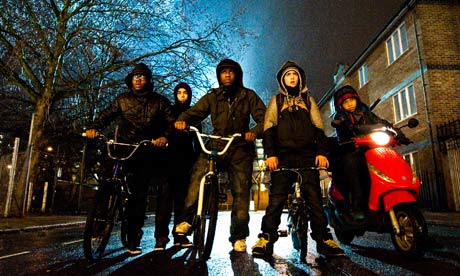
Attack the block


Released: March 2011
Genre: comedy/horror/sci-fi
Director: Joe Cornish 
Rating: 15

Focused on a group of gang, from South London who need to defend themselves against alien invaders due to a meteorite falling from the sky.


Throughout the film there is frequent use of swear words, also a lot of violence is portrayed and moreover there are detailed scenes of gore and pain. These are all justified by the BBFC and given a rating of 15 because the violence is not glamorised and all the actions are in self-defence. Also, the context of the film, where the scenario is fantastical and set in a dystopia along with what some critiques say the presentation of the monsters can be comic and humorous as they are hairy and glow in the dark teeth therefore the use of prolonged and intense violence is acceptable at 15.


Regarding the use of drugs, the film explores issues relating to drugs and has many scenes in which the characters are dealing, taking and producing their own drugs. The debatable topic of the use of drugs, in the end did not affect hugely the age rating as the film does not endorse the use of drugs, it merely represents the culture and context of the lives of the teenage gang. Moreover the fact that the ‘hero’ of the film does not use any drugs acts like a learning curve as the only ‘hero’ did not need drugs.

The use of firework as a weapon is something which the young audience may glorify as well as use themselves because this type of 'weapon' is easily accessible, however according to the BBFC due to the fact that the film is aimed at the older audiences and teenagers this therefore did not affect the overall rating and non of the scenes were modified that involved violence with fireworks.

I agree with the rating as the BBFC code of conduct relating to these issues suggest that in order for a film to pass the 15 rating the use of strong language may be frequent and explicit depending on the context it is used. Also, when it comes to drugs the film deals with issues relating to drugs but does not promote or glamorise it in any way. Also, with impressionable viewers, the weapon used are not as harmful and dangerous to the extent that it will be copied or imitated by it's viewers.

Sunday, 26 July 2015

Controversial film from BBFC


Attack the block
Released: March 2011
Genre: Comedy, Horror, Sci-Fi
Director: Joe Cornish
Rated: 15 (uncut)


Focused on a group of gang, from South London who need to defend themselves against alien invaders due to a meteorite falling from the sky.

Throughout the film there is frequent use of swear words, also a lot of violence is portrayed and moreover there are detailed scenes of gore and pain. These are all justified by the BBFC and given a rating of 15 because the violence is not glamorised and all the actions are in self-defence. Also, the context of the film, where the scenario is fantastical and set in a dystopia along with what some critiques say the presentation of the monsters can be comic and humorous as they are hairy and glow in the dark teeth therefore the use of prolonged and intense violence is acceptable at 15.


Regarding the use of drugs, the film explores issues relating to drugs and has many scenes in which the characters are dealing, taking and producing their own drugs. The debatable topic of the use of drugs, in the end did not affect hugely the age rating as the film does not endorse the use of drugs, it merely represents the culture and context of the lives of the teenage gang. Moreover the fact that the ‘hero’ of the film does not use any drugs acts like a learning curve as the only ‘hero’ did not need drugs.

The use of firework as a weapon is something which the young audience may glorify as well as use themselves because this type of 'weapon' is easily accessible, however according to the BBFC due to the fact that the film is aimed at the older audiences and teenagers this therefore did not affect the overall rating and non of the scenes were modified that involved violence with fireworks.

I agree with the rating as the BBFC code of conduct relating to these issues suggest that in order for a film to pass the 15 rating the use of strong language may be frequent and explicit depending on the context it is used. Also, when it comes to drugs the film deals with issues relating to drugs but does not promote or glamorise it in any way. Also, with impressionable viewers, the weapon used are not as harmful and dangerous to the extent that it will be copied or imitated by it's viewers.

Friday, 17 July 2015

Focus group- effectiveness of sound

Effectiveness of sound 


Research into the effectiveness of sound from as14rk on Vimeo.

Conducting my own research into the effectiveness of sound has helped to understand the value and importance of sound when producing my own film.

Analysing the facial expressions of the participants of the experimental group (who listened to just the audio) was enough to tell me how audiences can mentally connected with audio, one of the participants squinted her eyes and raised her eyes brows as mouth dropped towards the end- when the audio became loud and the sound effects (in the clip) of the protagonist grunting started increasing this clearly shows that sound is very effective, as it helps intensify the viewing experience for the audience without even seeing the footage. Moreover, the immediate reaction after asking 'how did that make you feel?' the overall response was 'omg that was so scary'. The participants mentioned that they tried to vision what was happening in the scene, one participant correctly guessed what was happening though the speech, which implies how sound could affect audience imagination. Also they mentioned how the instruments made them feel tense, increased their heartbeats and created a scary atmosphere overall.

The control group listened to exact same audio however they also watched the clip, as expected they had a different experience to the experimental group. Throughout the film, the facial expressions were not as vivid and in shock compared to the experimental group. When I asked them whether they would be scared if they watched the clip without the audio one of the participants said that they felt tense and more scared when the tempo of the music and volume had increased. They commented on how without the audio the visual wouldn't be as dramatic, this proves that the manipulation of audio can play on real emotions where the audience are so amerced that they feel apart of the scene and can understand what is being portrayed on both a mental and emotional level.
In my own short film I will ensure that during my post-production stage I edit my audio in a sophisticated manner where I can connect with my audience and express all my ideas. I will do this by ensuring that I am using non- diegetic and diegetic sound as well sound bridges that fit my sub-genre of zombie horror.

Thursday, 2 July 2015

R11- Careers in the film industry

Careers in the film industry  


There are many different types of jobs in the film industry, here is a summary of some jobs.

This helps me to understand the many different roles i'll be carrying out to produce my short film.

Source: Future Learn 

Thursday, 25 June 2015

R9- Night Night Nancy: textual analysis


R9- TEXTUAL ANALYSIS NIGHT NIGHT NANCY

Night Night Nancy is a horror film where a teenage girl is left spooked when she notices pictures taken of herself whilst asleep, with no one at home the main character- Nancy is left petrified as she tries to keep herself safe from harm.

Night Night Nancy, short horror: textual analysis.

The short horror film opens with a close up, of a text which reads 'Night Night Nancy' , it is used to set the scene, along with the ambient sound of general bedroom noise. The shot then changes to a wide shot where the character is shown to be asleep. Natural lighting is used to create realism and the overall silent morning atmosphere. The text conversation between Nancy and character- Josh is shown on screen, this allows the audience to understand what is going on and what is being said. The close up, point of view shots of the phone screen, clearly show what the character is looking at, this makes the audience feel a part of the scene. The close up allows the audience to see the character's facial expressions as she discovers the images, silence is used to create a realistic imagery.

The music, starts when the film has come to a climax, the low pitched metal-sound instruments along with the ambient sound of the door creak make the scene tense and create a horror atmosphere. Low key lighting is used to heighten the sense of alienation felt by the character, also, naturally this forms shadowy effects which is a key convention of horror. The sound of the music gradually increases as the character faces her fears, the music is used to both thrill and grip the audience making them interested and focus on the fear of the protagonist. The director also uses crab shots to signify the fear felt as the protagonist fears for her life. One of the main factors in this short film is the use of ambient sounds- the ambience creates a very familiar and mundane sounds to what the audiences may hear in reality, which works effectively in inducing fear into audiences.

The horror genre is often known for playing with real emotions and toying around with the idea of 'the unknown' a successful horror film often expresses these horror elements very well and I think this short film does this precisely due to the minimal sound is used alongside the 1 type of lighting style this gives it that extra edge creating a cold, horror theme.  

Also, as the facial expressions of the character as she screws her eyebrows and has her hands over her hands showing a sign of fear and helplessness making the audience sympathise with her. Towards the ending the director choses to introduce grotesque imagery which is often associated with death and blood. An unconventional element to this particular short film is that all the suspense, plot and twist of the story was saved until the ending which was unexpected and made me seem more awake and gripped.

https://www.youtube.com/watch?v=KiL6ECmzP-E 

R8- Victim short horror film: titles and credits


R8- TEXTUAL ANALYSIS OF VICTIM (TITLES AND CREDITS)

Victim is a short horror film, which has won a student award. It is based on 'Slender Man'. A film about a boy who becomes a victim to being stalked by a mythical creature 'Slender Man'.

Analysis of the titles and credits

The film begins with a series of shots which are all interlinked as they are iconic to the forest imagery in which the film is filmed in. As the shots are presented in a fast pace, the audio used in the beginning of the film correlates with the scenery as the music which is low pitched and increasingly loud, as well offering a static and unusual feeling which constructs a tense atmosphere. Perhaps the director chose to start with a range of shots creating a montage, to foreshadow the scenery which will be clearer in the film.

At 14 seconds the production title 'GEO Films' is presented in a background which is supposed to represent a grotesque and scary scene. The font of the title is faded into the background, creating a sense of unease. Also, the colours used which are old golden crispy and earthy colours such as black and brown create a vivid imagery of the woods and nature. This is followed by an establishing shot and ambient sound creating a sense of realism and reinforcing the idea that this is a normal, foggy winter morning. As an audience this makes me feel intrigued and a little unsettled as the scenery of the fog and the ice cold branches of the trees is what I witness on a cold winter morning myself, attracting my attention to see what will happen.

At 48 seconds the titles begin with 'JEO Films present'... 'A Film by Eddie Anderson'. The director chose to keep a simple yet sophisticated house style, which appears both professional and presentable. This is then followed by the actors and actresses names and a sting which was heard when the film first started. The director uses both ambient and non-diagetic sound which instills fear in me as the realism and the fear of the unknown are combined together, this is a key convention in horror films. By doing this the director immediately gives an insight into the setting and atmosphere of the film, in which the audience create an expectation of what they will see in the short film.

Finally, at 1:27 the title of the film 'VICTIM' is presented which with the sound and imagery of the woods keeps the audience amerced and interested to see what this is about. My initial thoughts, until the title of the film at 1:27 was that there will be a heinous act in which a person (the victim) is left traumatised, I gathered this information because of the method the director uses, without revealing the plot, the sound made me feel afraid expecting gore and the imagery of flat land reinforced the idea that there will be a sense of lonely and aloneness.

The film ends its credit with the title of the film.

I think is is an effective way to introduce the tittles, the typography follows a consistent style it's edgy and expresses harsh tone to the film. Also it grips the audience's attention from the beginning, portraying the horror theme through the extreme close ups of particular wood/forest imagery. The titles have a consistent house style which is easily recognisable.

This helps me understand how to present my titles in a creative way which the audience are going to be captivated from the beginning of the film, setting the scene of a horror themed film and presenting the cast members at the same time.    

https://www.youtube.com/watch?v=EsC1_PCOGos

Friday, 19 June 2015

R6- ABE: textual analysis


R6- TEXTUAL ANALYSIS: ABE

The movie opens with a consistent house style on a plain black background immediately reinforcing the horror theme as the silence makes it tense and creates an atmosphere of suspense leaving the audience with an expectation of being frightened. 

ABE opens with an enigma code, grabbing the attention of the audience as the establishing shot of the curtains and the chains is rather peculiar and opens in a mysterious way. The curtains and lack of in an isolated room are conventions of the horror genre as they are typical icons used throughout horror films as it connotes the idea of secrecy and induces a level of fear in audiences. The icons could be used to foreshadow the scary scenes that are yet to be discovered by the audience. 

The shadowy effect created alongside the low key lightning is a key convention of horror films which creates a spooky setting, the film plays with typical conventions of horror films to draw in its existing audience as McLellan uses the fear of the unknown - as audience's are left intrigued and curious as to what lays behind the curtains, their own interpretations of the chain and curtains and what they are used for is possibly worse in the audience's imagination that what actually happens. 

The panning of the equipment which was sharp, heavy and metal denote the agony and pain the victim could possibly go through, again the dear of the unknown is used.

A moth is used to portray a short, yet insignificant life this may be used to represent the victims life. In addition, the moth also represents the ideology that they are attracts to what kills them, as the moth flies around the light which will eventually end it. The cruel characterisation of the robot slashes the moth, perhaps the director is foreshadowing what will happen to the victim. The use of violence and harsh 'punishment' is also a key theme which is reoccurring in many horror films. 


Binary opposition is used to create sympathy as the victim is wearing a pink dress which represents her youth and innocence, this is directly contrasted with the barbaric setting she is placed in. The restrictions on her mouth, hands and legs is a connotation of her helplessness and lack of power.         

The director used the conventional bright red blood which is associated with danger, fear and death. The splattering of blood signifies the agony in which the victim felt, sadistic characters are of a main focus in horror films that fall into the sub-genre of sc-fi and psychological horror.  

The sting associated with the robot enhances the visual imagery as the slow, mid pitched sounds of piano and continuous loud drones makes the movie sound scary, sound is used throughout the movie to create fear and a tense atmosphere. The movie ended with the robot having a flash back, in which editing is used to create a hazy yet vivid picture of how he spent his life, reminiscing the past experiences which helps the audience understand from his perspective and perhaps justifies his actions. The movie ended with the frame fading into black, connoting the ending of a life, as well as scene. The house style of the front is sustained from the titles, to the credit. 


It relates very well to the horror genre as it carries an enigma throughout the film, the location, mes-en-scen as well as the sharp music and hollow sounds all link and create a tense atmosphere.